Foolproof White Sourdough Bread Recipe
Introduction
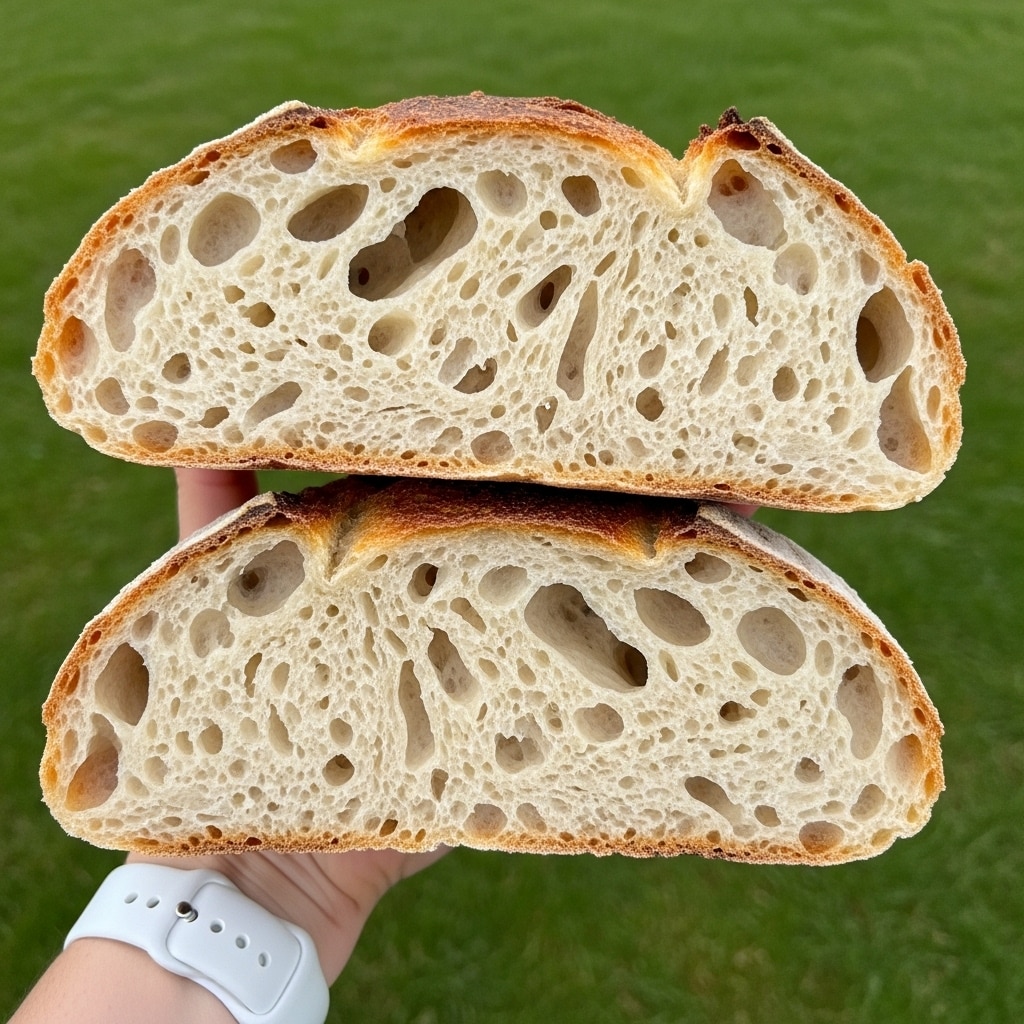
This foolproof white sourdough bread recipe guides you through each step to create a delicious, crusty loaf with a tender crumb. Perfect for home bakers looking to master sourdough with confidence and consistent results.
Ingredients
- 25 g sourdough starter
- 125 g water
- 125 g bread flour
- 600 g warm water
- 240 g active sourdough starter
- 1,000 g bread flour
- 20 g sea salt
- 40 g warm water
Instructions
- Step 1: The night before baking, feed your starter by combining 25 g sourdough starter, 125 g water, and 125 g bread flour in a jar. This 1:5:5 feeding ratio will help it peak and become active by the next day.
- Step 2: When your starter is active and peaked (ideally doubled or tripled in size), mix 600 g warm water, 240 g active starter, and 1,000 g bread flour until a shaggy dough forms. Perform slap and folds on the counter for 1-2 minutes to build strength, then cover and rest for 1 hour.
- Step 3: After resting, add 40 g warm water and 20 g sea salt. Knead the dough and continue slap and folds until the dough feels smooth and elastic. The dough may separate and feel rubbery at first; keep working until it comes back together.
- Step 4: Let the dough rest for 30 minutes, then perform 4 sets of stretch and folds spaced 30 minutes apart. Adjust dough temperature to stay between 78°-80°F (25.5°-26.6°C) by using your oven light or room temperature as needed.
- Step 5: After the final stretch and fold, allow the dough to bulk ferment until it is puffy, domed, and bubbly—usually 4-5 hours at the right temperature. It should jiggle slightly when nudged and feel tacky but not sticky.
- Step 6: Use a bench scraper to divide the dough into two pieces if making two loaves. Shape each piece into a round and let them rest for 30 minutes.
- Step 7: Shape the dough using the caddy clasp technique. For a batard, fold like a book and place seam-side down in a floured banneton, pinching the seams closed. For a boule, fold in both directions, tighten the shape with a bench scraper, and place into bannetons.
- Step 8: Cover the bannetons and refrigerate overnight for cold retardation (12-36 hours, not exceeding 96 hours).
- Step 9: Preheat your oven to 450°F (230°C) with Dutch ovens inside. Transfer dough to parchment paper, score the surface, and place it in the Dutch oven. Add 1-2 ice cubes to the bottom for a blistered crust if desired.
- Step 10: Bake with the lid on for 25 minutes, then remove the lid and bake for an additional 10-15 minutes until golden brown with an internal temperature of 205-210°F (96-99°C).
- Step 11: Cool the bread on a wire rack for at least 90 minutes before slicing to allow the crumb to set properly.
Tips & Variations
- Use a water temperature calculator to achieve the ideal dough temperature of 78°-80°F (25.5°-26.6°C) for best fermentation results.
- During the second set of stretch and folds, add 350-400 g of inclusions like nuts, seeds, or dried fruit, avoiding sugars or syrups.
- If the dough sticks when dividing or shaping, lightly mist your bench scraper and work surface with water.
- Adjust fermentation time based on your dough’s temperature and visual cues rather than strictly by the clock.
Storage
Store cooled sourdough bread in a paper bag or bread box at room temperature for up to 3 days to maintain crust crispness. For longer storage, wrap tightly in plastic and freeze for up to 3 months. To refresh, bake frozen slices at 350°F (175°C) for 10-15 minutes.
How to Serve
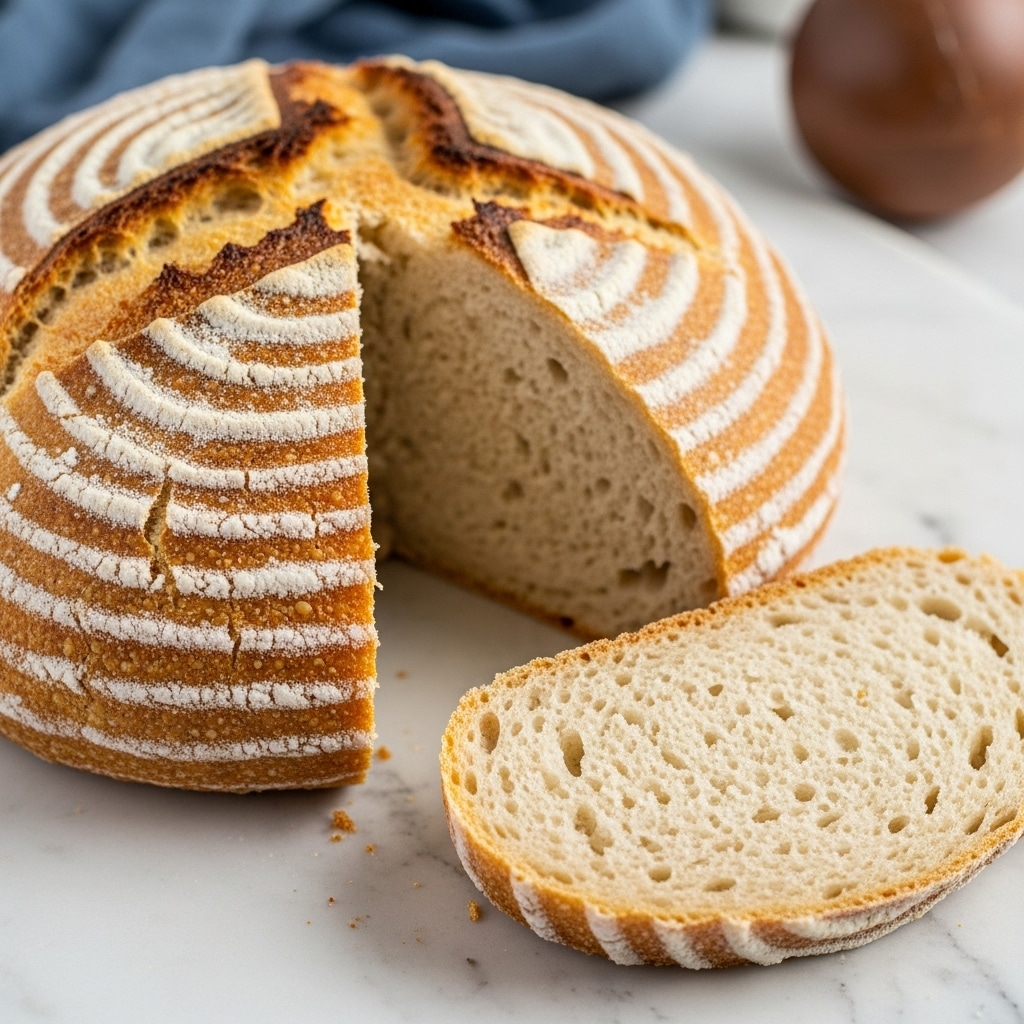
Serve this delicious recipe with your favorite sides.
FAQs
How do I know when my sourdough starter is ready to use?
Your starter is ready when it has at least doubled or tripled in size, with a flat or slightly concave surface, and passes the float test by floating in water.
Can I use this recipe for a single loaf instead of two?
Yes, simply divide the quantities by half and skip the dividing step. Shape and bake the single loaf following the same instructions.
PrintFoolproof White Sourdough Bread Recipe
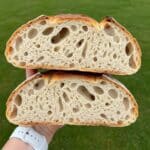
This foolproof white sourdough bread recipe guides you through the entire process from feeding your starter to baking a crusty, flavorful loaf. Perfect for home bakers wanting a reliable method for achieving a tender crumb with a golden crust using natural fermentation and slow cold retardation.
- Prep Time: 12 hours (including starter feeding and resting times)
- Cook Time: 40 minutes
- Total Time: Approximately 13 hours (including cold retard of 12-36 hours, prep, and baking)
- Yield: 2 loaves 1x
- Category: Bread
- Method: Baking
- Cuisine: French
- Diet: Vegetarian
Ingredients
Starter Feeding
- 25 g sourdough starter
- 125 g water
- 125 g bread flour
Dough
- 600 g warm water
- 240 g active sourdough starter
- 1,000 g bread flour
- 20 g sea salt
- 40 g warm water
Instructions
- Feed Your Starter: The night before baking, combine 25 g sourdough starter, 125 g water, and 125 g bread flour in a jar at a 1:5:5 ratio. Let it ferment about 10 hours at 75°F/24°C until it doubles or triples, with a slightly concave top.
- Mix Your Dough: Use Maurizio Leo’s water temperature calculator to get a final dough temperature of 78°-80°F (25.5°-26.6°C). Combine 600 g warm water, 240 g active sourdough starter, and 1,000 g bread flour until a shaggy dough forms. Perform slap and folds on the counter for 1-2 minutes then cover and rest for 1 hour.
- Add Salt and Knead: After the 1-hour rest, add 40 g warm water and 20 g sea salt. Knead and do slap and folds until the dough is smooth and rubbery, working the salt into the dough. This may take a few minutes until the dough comes together fully.
- Stretch and Folds: Rest dough 30 minutes. Perform 4 sets of stretch and folds at 30-minute intervals, optionally using coil folds for gentler handling on the final sets. Maintain dough temperature between 78°-80°F by adjusting proofing environment.
- Bulk Fermentation: Allow dough to ferment until puffy and domed, about 4-5 hours at optimal temperature. Confirm dough jiggles like Jell-O and shows plenty of bubbles on bowl sides. If cooler, fermentation takes longer. Overproofing is preferred over underproofing.
- Divide and Pre-Shape: Use a bench scraper to divide dough into two pieces for two loaves (or skip if making one loaf). Shape into rounds using a candy cane motion then let rest for 30 minutes.
- Final Shape: Use the caddy clasp technique to shape dough. For batards, fold like a book and place into floured bannetons, pinching seams closed. For boules, do a double clasp and tighten the round before placing in bannetons.
- Cold Retard: Cover bannetons and refrigerate overnight for 12-36 hours but do not exceed 96 hours to develop flavor and improve dough handling.
- Score and Bake: Preheat oven to 450°F (230°C) with Dutch ovens inside. Transfer dough to parchment or sling, score the surface, and place in Dutch ovens. Optionally add 1-2 ice cubes for crust blistering. Bake covered for 25 minutes, then uncover and bake an additional 10-15 minutes until golden brown and internal temperature is 205-210°F (96-99°C). Cool on wire rack at least 90 minutes before slicing.
Notes
- Use Maurizio Leo’s water temperature calculator for accurate dough temperature.
- Optional inclusions like nuts or seeds can be added during second stretch and fold (350-400 g for two loaves).
- Dough temperature is critical: keep between 78°-80°F (25.5°-26.6°C) during fermentation for best results.
- Resting times and proofing can vary depending on ambient temperature.
- Cold retard develops flavor and improves dough texture—do not exceed 96 hours.
- Cooling bread completely before slicing ensures proper crumb texture and moisture balance.
Keywords: white sourdough bread, sourdough recipe, artisan bread, homemade bread, natural fermentation, cold retard bread, no-knead sourdough, baking bread